
Mind Walk
Mindfulness & Emotional Wellness App
An interactive mobile experience that helps users manage stress, build healthy habits and develop emotional intelligence through mindfulness and gameplay.

Your Emotional Wellness Companion
A playful guide designed to help users build emotional awareness, reduce stress and create healthier habits through mindfulness and gamified experiences.
Project At A Glance
A mindfulness experience built from real user research, focused on stress reduction, emotional awareness and habit building.
Why Mind Walk?
People struggle with stress, emotional overwhelm and staying present in daily life. Mind Walk transforms mindfulness into a playful and engaging daily habit through challenges, reflection and emotional growth.
My Role
Design Process
Understanding The Problem
Research findings that shaped the Mind Walk experience and guided design decisions.
Inside The User's Mind
Understanding how users think, feel, behave and communicate through research insights.
From Interviews To Product Decisions
After conducting interviews and card sorting sessions, recurring patterns emerged that directly influenced the product strategy.
Stress & Anxiety
- Fear of making mistakes
- Social interactions feel overwhelming
- Hard to switch off and recharge
- Pressure from relationships and work
- Feeling isolated during stressful periods
Engagement
- Apps lose novelty quickly
- Need fresh experiences regularly
- Want personalized content
- Consistency is difficult
- Exploration keeps motivation high
Play & Curiosity
- Enjoy simple games
- Like mental challenges
- Love teamwork experiences
- Need playful interactions
- Fun increases participation
Community & Safety
- Need safe spaces
- Want supportive communities
- Sharing helps reduce stress
- Need trust before opening up
- Professional guidance matters
Motivation
- Rewards encourage consistency
- Progress tracking matters
- Milestones feel meaningful
- Discounts increase engagement
- Recognition boosts motivation
Design Opportunities
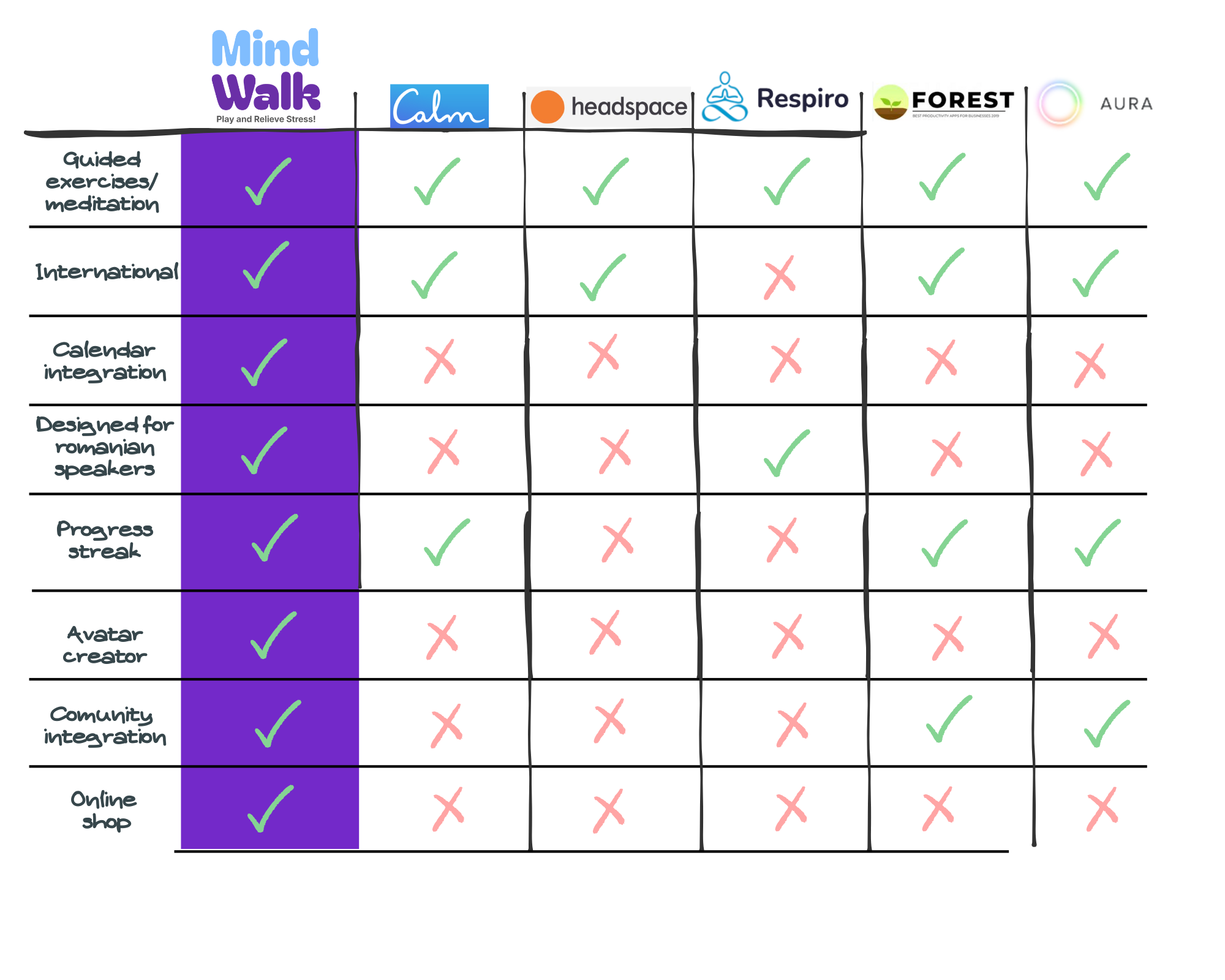
Finding The Market Gap
We analyzed leading wellbeing apps to identify opportunities, differentiate the product and uncover market gaps.
View Full Competitive Matrix
Who Are We Designing For?
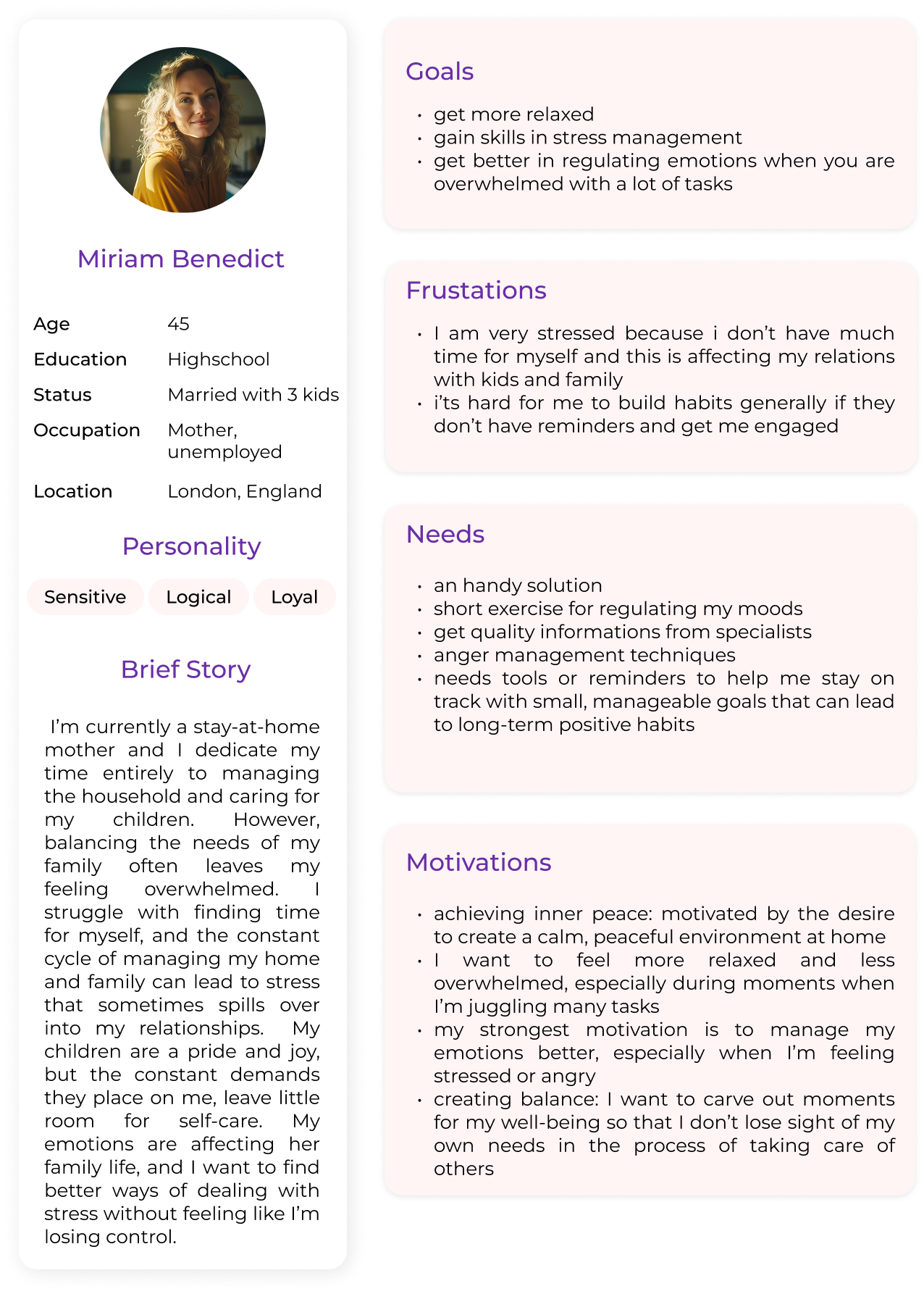
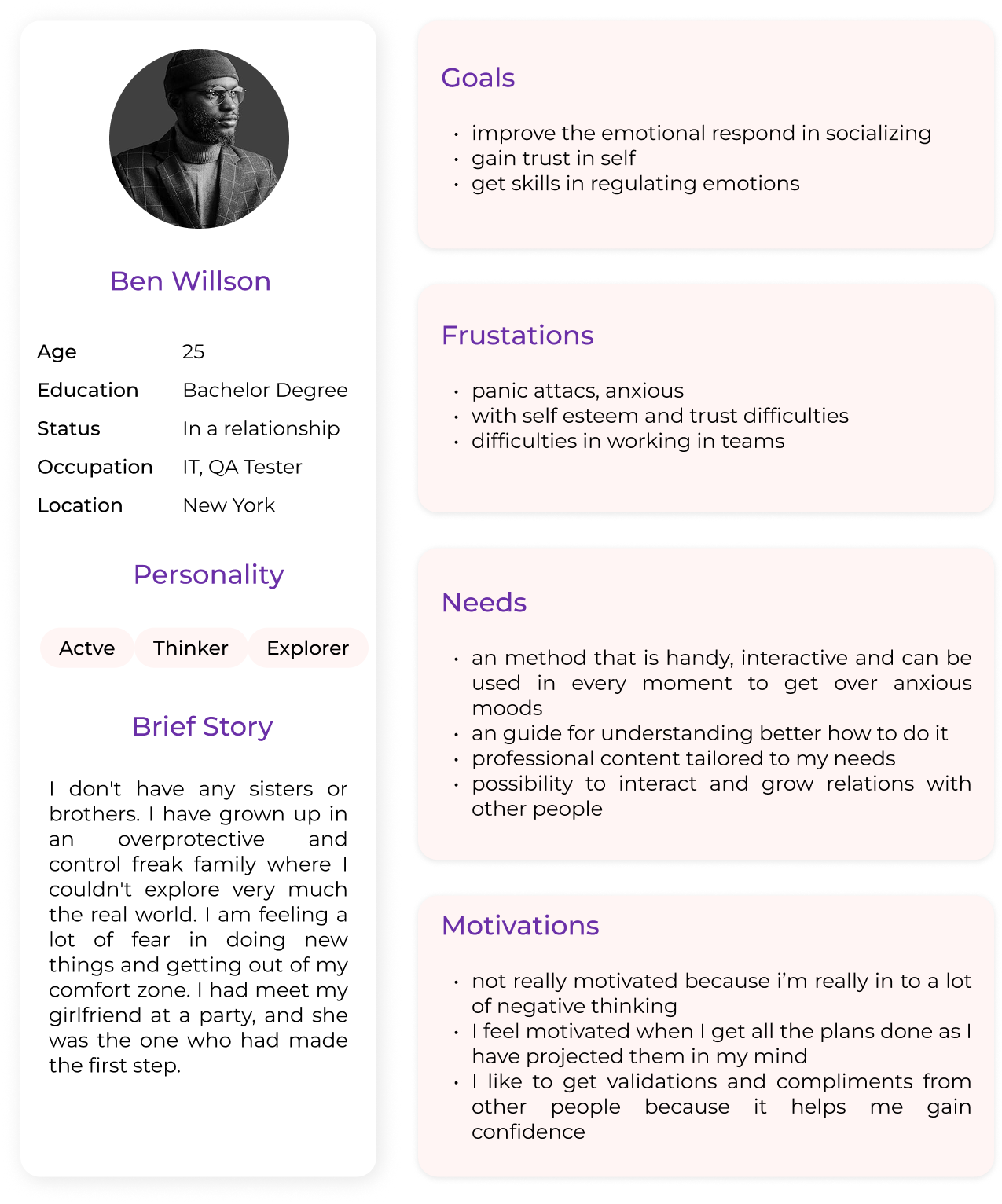
Three primary user groups emerged from the research, each with unique motivations, frustrations and wellbeing goals.

Miriam Benedict
Goals
- Reduce stress
- Build healthy habits
- Manage emotions
Pain Points
- No time for herself
- Hard to stay consistent
- Feels overwhelmed

Ben Willson
Goals
- Improve social confidence
- Gain emotional control
- Feel more secure
Pain Points
- Social anxiety
- Fear of mistakes
- Low self-esteem

Alina Tănasă
Goals
- Work-life balance
- Build healthy routines
- Reduce stress
Pain Points
- Workaholic tendencies
- Burnout risk
- Lack of downtime
View Full Persona Profiles
What We Learned
Research revealed emotional patterns, motivations and barriers that directly shaped the Mind Walk experience.
Consistency Is Hard
Most users already knew mindfulness techniques but struggled to practice them regularly.
Stress Was The Main Trigger
Managing stress and emotional overwhelm was the primary reason people looked for wellbeing solutions.

Build Your Shadow Friend
A personalized creature that reflects your emotions, fears and strengths. Instead of fighting difficult emotions, users learn to understand and grow with them.
People Need Motivation
Users wanted progress, rewards and a sense of achievement to stay engaged.
Traditional Apps Felt Passive
Many users found existing mindfulness apps repetitive and difficult to stick with.
Transforming Insights Into Structure
Research findings were translated into navigation systems, task flows and product architecture that support users in building mindful habits with ease.
01
Task Flows
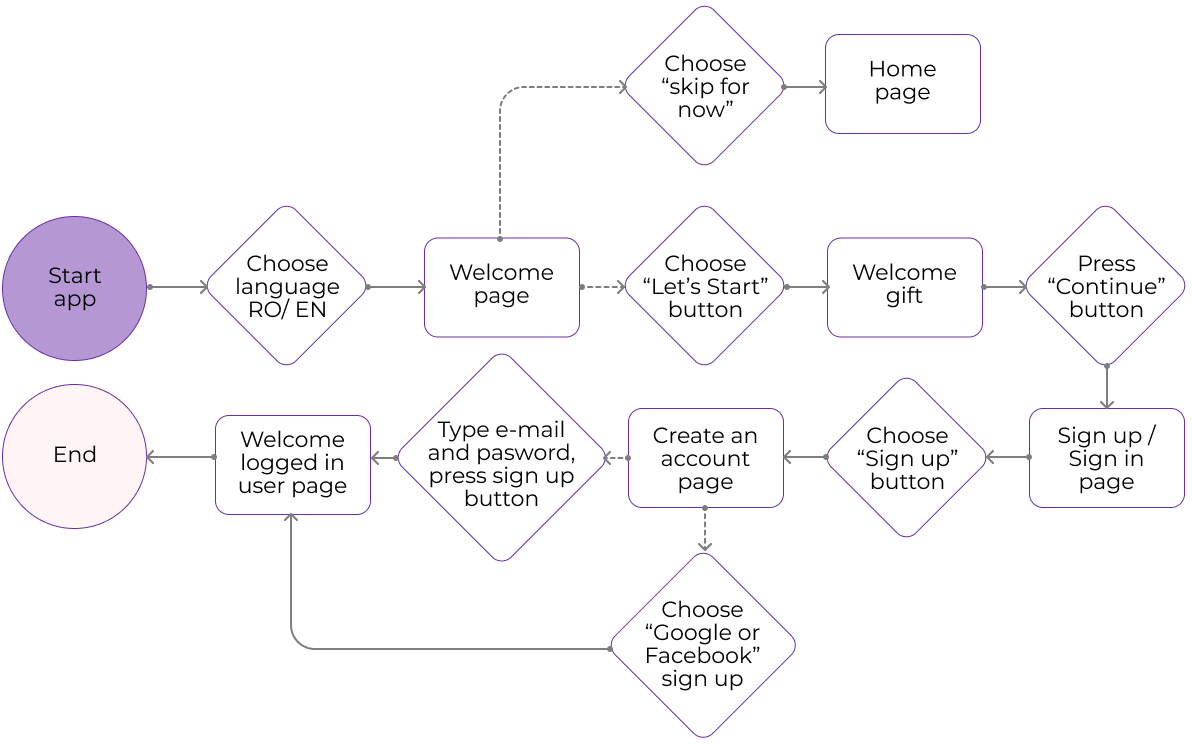
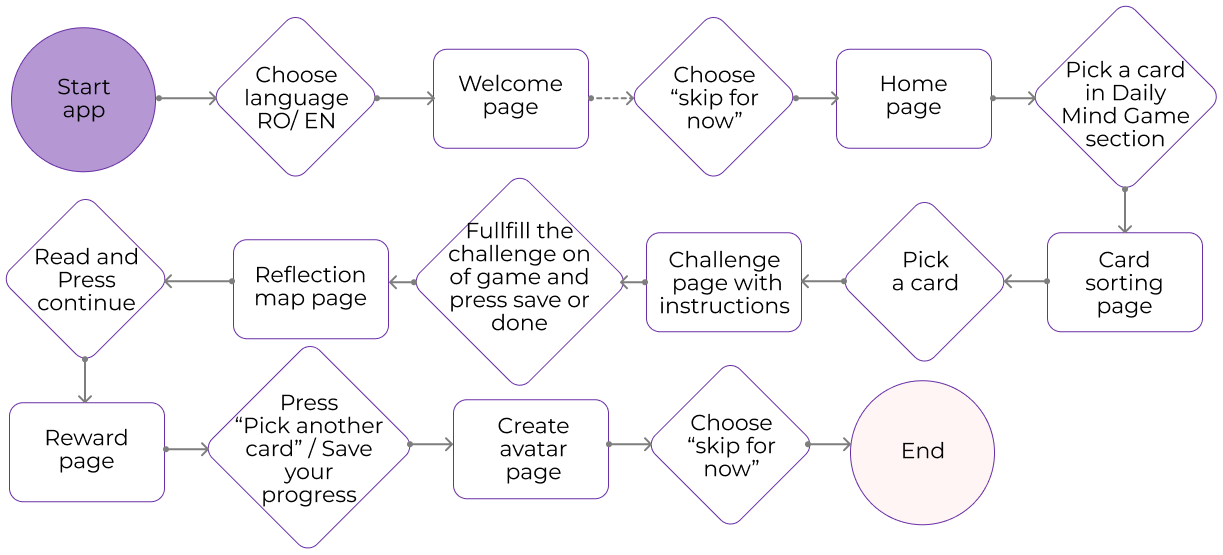
Mapping the most important user journeys:
onboarding and completing a Daily Mind Game.
Task Flows
Mapping the most important user journeys: onboarding and completing a Daily Mind Game.
02
Product Structure
Defining how content, navigation and user journeys work
together to create a seamless user experience.
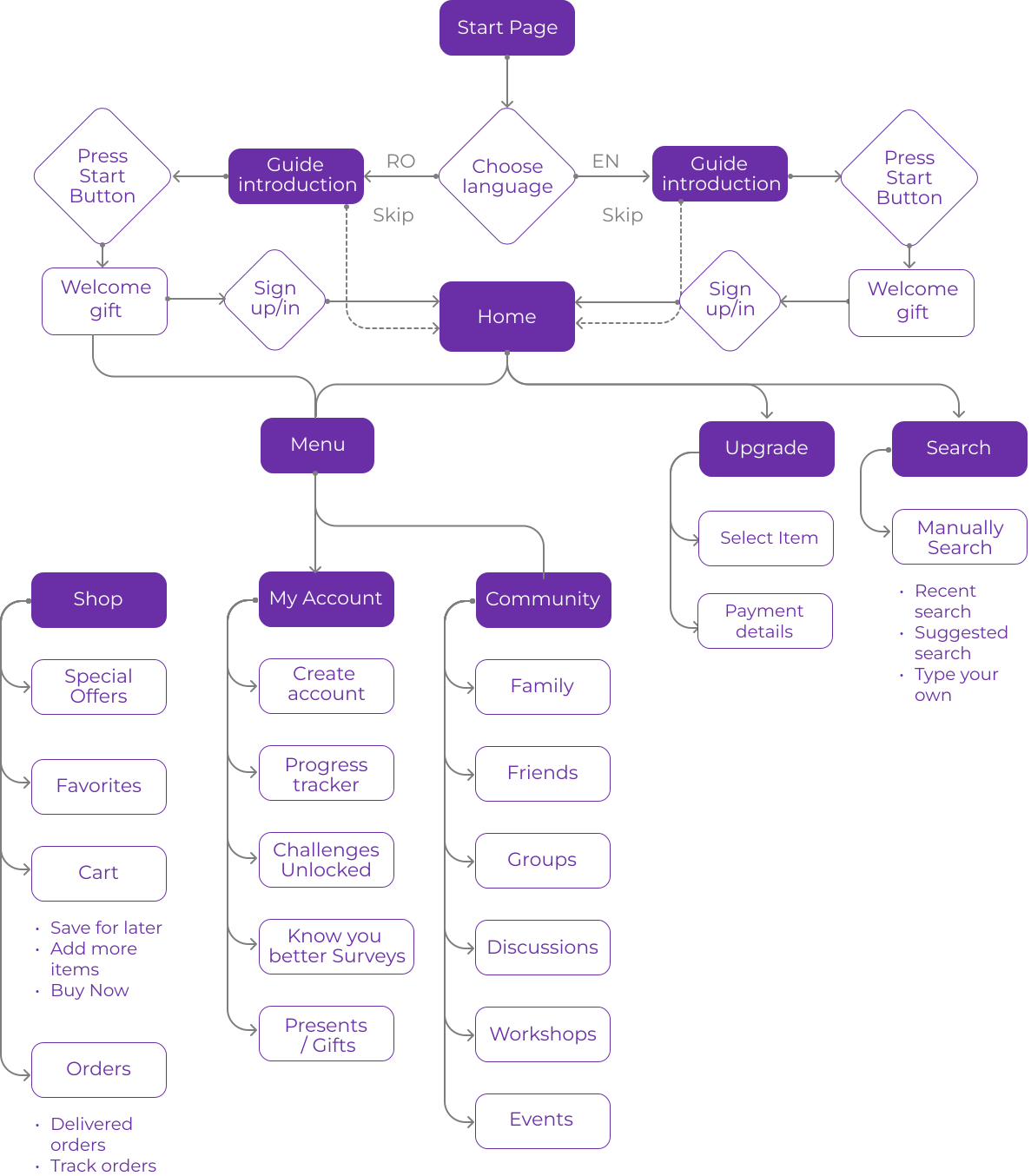
Product Structure
Defining how content, navigation and user journeys work together to create a seamless user experience.
Information Architecture
The product was organized around four primary areas:
- Daily Mind Games & Challenges
- Community & Social Interaction
- Progress Tracking & Rewards
- Marketplace & Premium Content
User Journey Mapping
The final journey was designed to minimize friction and encourage habit formation.
- Simple language selection
- Fast onboarding experience
- Immediate access to daily activities
- Clear progress and achievement feedback
- Easy return to unfinished challenges